
The Best Titrators of 2026: A Buyer's Review of Price and Features

Written By: Craig Bradley
May 29, 2024
Precision and throughput remain the twin pillars of the modern laboratory, driving the demand for automated titration systems that minimize human error while maximizing data integrity. The best titrators of 2026 reflect a shift toward modularity and digital integration, allowing laboratory professionals to scale their operations without overhauling entire workflows. As regulatory standards in pharmaceutical and environmental sectors tighten, equipment manufacturers have responded with instruments featuring advanced algorithms, smaller footprints, and seamless LIMS connectivity. This article evaluates the top five titration models available this year, focusing on operational efficiency, recent technological innovations, and long-term value for scientific applications. Best Overall: OMNIS Platform — Metrohm Extensive modularity allowing labs to combine titration, spectroscopy, and automation on a single platform. Best High-End Option: EVA Volumetric Karl Fischer — Mettler Toledo Features the new Fast Forecasting Amperometric (FFA™) algorithm for rapid water content determination. Best On A Budget: HI931 — Hanna Instruments A compact, space-saving potentiometric titrator delivering essential automation at an accessible price point. Most Versatile: TitroLine® 7800 — SI Analytics (Xylem) Universal capabilities supporting both potentiometric and volumetric Karl Fischer titration with digital sensor inputs. Best For Water Analysis: Titralab AT1000 — Hach Pre-programmed application packs make it the industry standard for water quality and environmental testing. Price Range: $20,000 – $50,000+ (Highly configuration-dependent)
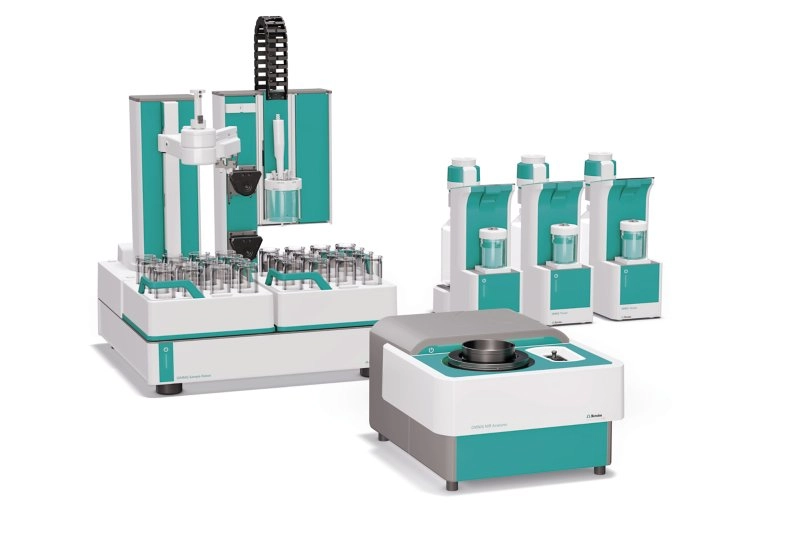
Best For: Overall Performance & Scalability The OMNIS platform continues to define the standard for high-throughput laboratories in 2026. Rather than a single instrument, Metrohm engineered OMNIS as a modular ecosystem that grows with the laboratory's needs. Its primary function consolidates multiple analytical techniques—such as potentiometric titration and near-infrared spectroscopy (NIRS)—into a single, unified interface. This integration reduces bench space requirements and centralizes data management, a critical factor for regulated environments adhering to ALCOA+ principles. Key Specs Throughput: Parallel titration of up to four samples simultaneously. Automation: Compatible with the OMNIS Sample Robot for unattended processing of up to 175 samples. Software: OMNIS Client/Server software with central data management. Safety: 3S Liquid Adapter technology for contactless reagent handling. Performance & Applications
The OMNIS platform suits complex chemical manufacturing and pharmaceutical quality control where sample volume is high and method diversity is vast. The system's recent integration of NIRS allows for rapid screening before titration, optimizing chemical usage. Its "Good Vibes" interface uses visual status indicators to simplify operation for technicians. Ideally suited for large-scale R&D and QC labs, OMNIS handles everything from simple acid-base titrations to complex surfactant determinations with high reproducibility. Price Range: $12,000 – $17,000
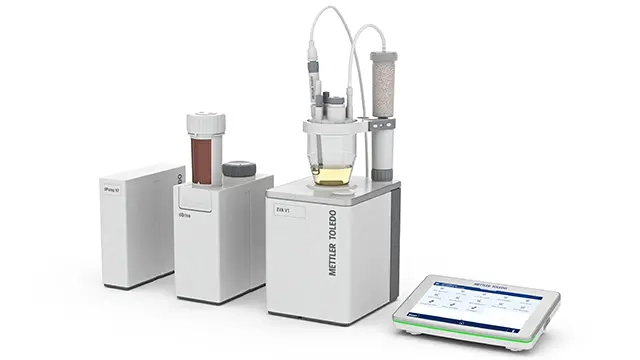
Best For: High-End Speed & Precision Released in late 2024, the EVA Volumetric Karl Fischer titrator introduces advancements in moisture analysis technology. Mettler Toledo prioritized artificial intelligence with this model, incorporating the Fast Forecasting Amperometric (FFA™) algorithm. This technology analyzes the reaction curve in real-time to predict the endpoint earlier than traditional methods, reducing analysis time without compromising accuracy. Key Specs Algorithm: Proprietary FFA™ for accelerated endpoint detection. Interface: OneClick™ touchscreen user interface with user-specific shortcuts. Connectivity: Native LabX™ software integration for full regulatory compliance (21 CFR Part 11). Sensor: High-resolution digital dSens M143 probe. Performance & Applications
Mettler Toledo engineered the EVA series specifically for the pharmaceutical and petrochemical sectors where water content determination is a critical release parameter. The system's predictive capabilities make it valuable for hygroscopic samples that require rapid processing to prevent environmental moisture interference. Beyond speed, the "Smart Chemical" functionality automatically identifies reagents via RFID, preventing the use of expired chemicals and ensuring data traceability. It acts as a primary option for laboratories requiring absolute precision in water determination. Price Range: $4,500 – $6,500
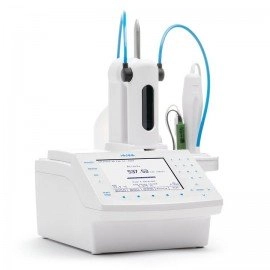
Best For: Budget-Conscious Labs The HI931 serves as a solution for smaller laboratories or educational institutions requiring automation without the capital expenditure of a modular platform. As a recent update to Hanna’s automated line, this model features a 50% smaller footprint than its predecessors, addressing bench space limitations in modern facilities. Despite its lower cost, it retains essential features like dynamic dosing and results graphing, positioning it for professional use rather than as a basic educational unit. Key Specs Footprint: Compact design (approx. 12 x 8 inches). Dosing Accuracy: 40,000-step piston-driven pump for precise titrant delivery. Data Storage: Internal memory for up to 100 titration reports. Material: Chemically resistant Cycoloy® body. Performance & Applications
Ideally suited for food and beverage analysis, such as acidity testing in wine or juice, the HI931 offers robust performance for dedicated routine applications. While it lacks the parallel processing of the OMNIS or the predictive AI of the EVA, it performs standard acid-base, redox, and ion-selective electrode (ISE) titrations with high reliability. Its streamlined interface allows technicians to run methods with minimal training, making it an effective workhorse for production floor QA/QC stations. Shop Hanna Instruments on LabX Price Range: $11,000 – $16,000
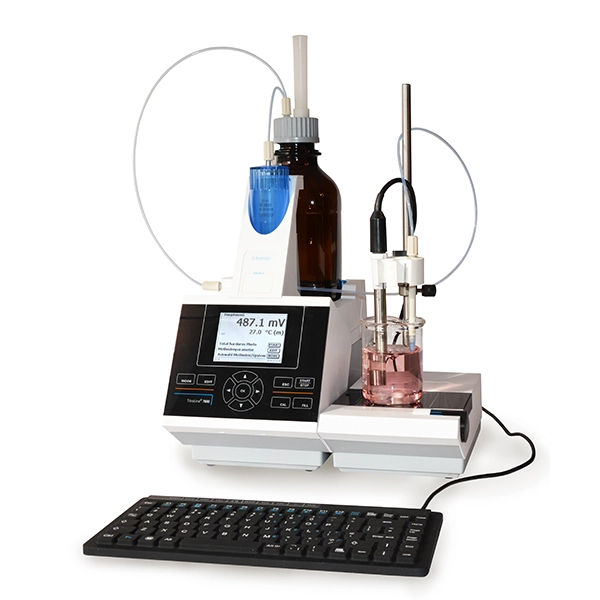
Best For: Versatility The TitroLine® 7800 functions as a universal titrator capable of bridging the gap between potentiometric titration and volumetric Karl Fischer analysis. Its defining feature includes Intelligent Digital Sensor (IDS) technology. Unlike analog inputs, IDS sensors convert the measuring signal into digital data directly within the sensor head, eliminating interference from electromagnetic noise—a common issue in industrial environments with heavy machinery. Key Specs Measurement Inputs: Digital (IDS) and analog pH/mV inputs. Capabilities: Potentiometric titrations and volumetric KF moisture analysis in one unit. Display: High-visibility, full-color graphic display. Data Export: Multiple USB and RS232 ports for printers, barcodes, and USB storage. Performance & Applications
Contract testing laboratories utilize this model for handling a wide variety of sample types daily. A user might perform a pH titration on an aqueous sample in the morning and switch to water content analysis in a solvent later in the day using the same unit. The digital sensor technology ensures signal stability even in environments with electrical noise, making the TitroLine® 7800 a rugged and reliable choice for industrial chemical processing and diverse analytical testing services. Price Range: $4,500 – $6,000
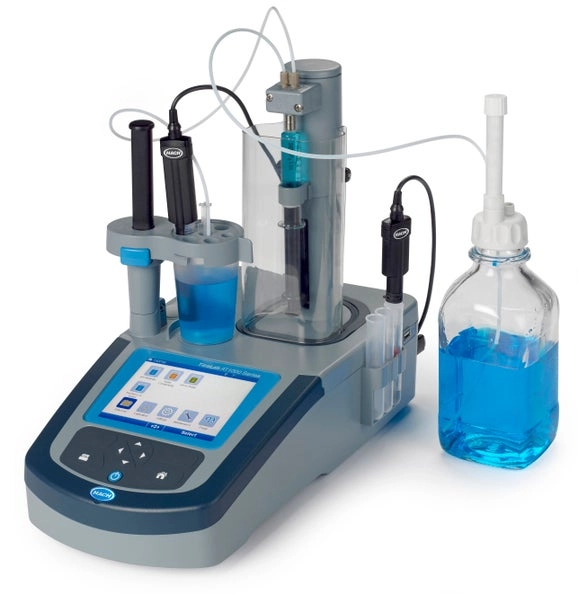
Best For: Water Analysis & Throughput For environmental and municipal water laboratories, the Hach Titralab AT1000 remains a standard in 2026. This system centers on "Application Packs"—pre-programmed methods that cover specific parameters like pH, alkalinity, hardness, and chlorine. This approach eliminates complex method development, allowing operators to simply load the sample and press start. Key Specs Methodology: Pre-programmed Application Packs (e.g., pH/Alkalinity, Total Hardness). Automation: Integrated peristaltic pumps for automatic reagent addition. Maintenance: No tools required for routine maintenance or tube replacement. Safety: Sealed system minimizes operator exposure to reagents. Performance & Applications
Hach engineered the AT1000 for throughput and simplicity in water quality analysis. It removes the variability associated with manual titrations, ensuring consistent results regardless of the operator's skill level. Wastewater treatment plants, drinking water facilities, and industrial water monitoring sites extensively use this system. Its ability to perform sequential measurements (e.g., pH followed by alkalinity) on a single sample volume streamlines workflows and reduces sample consumption. Model Best For Key Features Typical Price Range Metrohm OMNIS Overall Performance Modular platform, parallel titration, 3S liquid handling $20k – $50k+ Mettler Toledo EVA High-End / Speed Fast Forecasting Amperometric (FFA™), LabX support $12k – $17k Hanna HI931 Budget / Compact 50% smaller footprint, 40,000-step pump, simplified UI $4.5k – $6.5k SI Analytics TitroLine 7800 Versatility Intelligent Digital Sensors (IDS), Combo Potentiometric/KF $11k – $16k Hach AT1000 Water Analysis Application Packs, integrated peristaltic pumps $4.5k – $6k Selecting the best titrators of 2026 requires balancing the specific analytical needs of the laboratory with budget and space constraints. While the Metrohm OMNIS remains a primary choice for scaling operations and high throughput, the recently released Mettler Toledo EVA offers speed for moisture analysis. For facilities focused on specific routine applications like water testing or food quality, targeted solutions like the Hach AT1000 and Hanna HI931 provide cost-effective precision. Ultimately, the integration of digital sensors and predictive algorithms in these modern systems ensures that laboratories can maintain data integrity and efficiency. This article was created with the assistance of Generative AI and has undergone editorial review before publishing.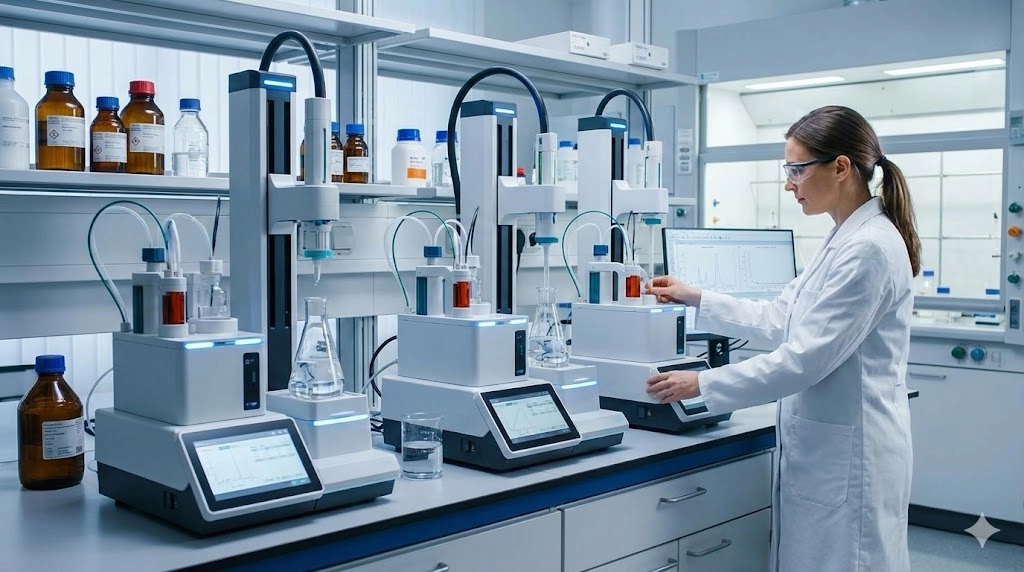
Quick Summary: Top Picks for 2026
OMNIS Platform – Metrohm
EVA Volumetric Karl Fischer – Mettler Toledo
HI931 – Hanna Instruments
TitroLine® 7800 – SI Analytics
Titralab AT1000 – Hach
Comparison Table
Conclusion: Selecting the Best Titrator for 2026
Dec 15, 2025
Featured, Popular Products
Automated 3D Cell Culture Workflows: Reshaping Disease Research and Drug Development
As 3D cell systems move from exploratory research into routine use across drug development and translational science, automation is becoming essential.
Dec 11, 2025
Technical Insight
The Best FPLC Systems of 2026
Discover the top FPLC systems of 2026 for protein purification. This guide reviews price, specs, and performance for leading lab equipment models.
Dec 10, 2025
Featured, Popular Products
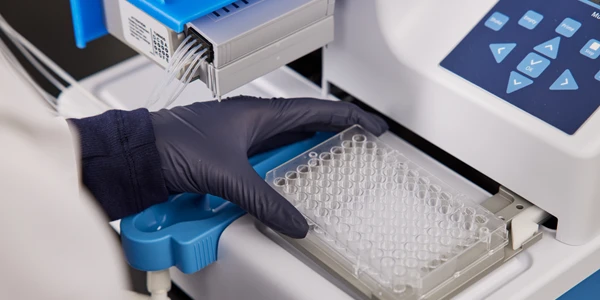
How Microplate Dispensers Enable Modern Research and Discovery
From drug discovery to genomics, almost every lab today depends on microplate dispensers.
Dec 08, 2025
Technical Insight
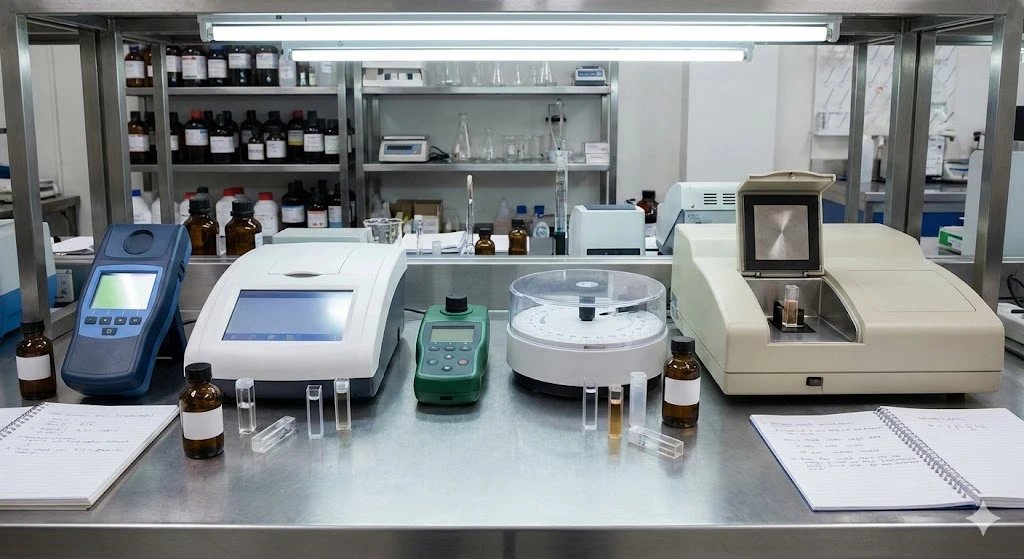
The Best Colorimeters of 2026
Discover the top-rated colorimeters of 2026 for laboratory professionals. We review the best new models for accuracy, speed, and chemical analysis.
Dec 08, 2025
Technical Insight
The Best DNA Sequencers of 2026
Discover the top-performing DNA sequencers of 2026. This guide reviews the latest high-throughput, benchtop, and long-read models for modern laboratories.
Dec 08, 2025
Technical Insight
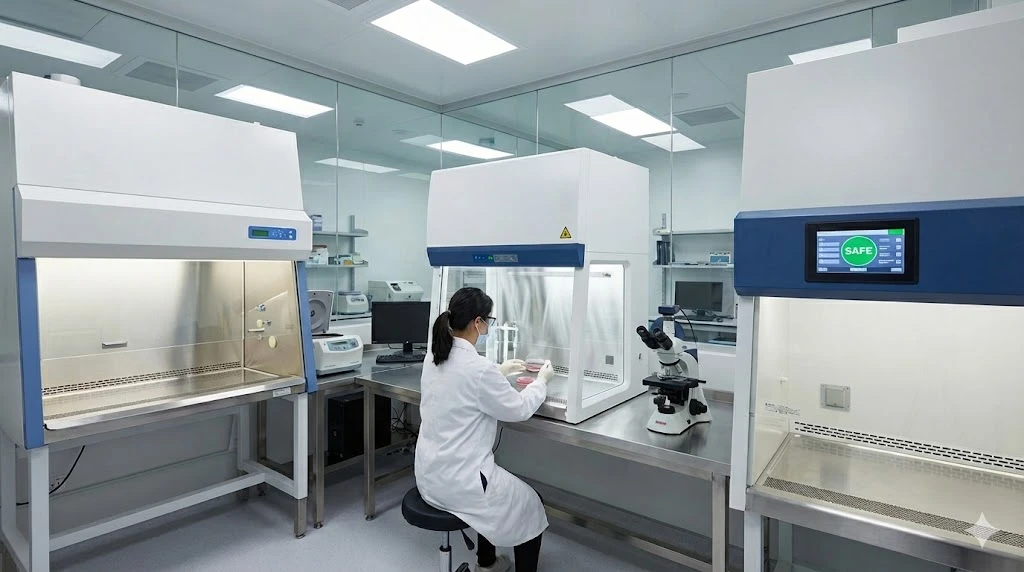
The Best Biosafety Cabinets and Laminar Flow Hoods of 2026
Discover the top biosafety cabinets and laminar flow hoods of 2026. This guide reviews safety, efficiency, and features for optimal laboratory protection.
Dec 05, 2025
Technical Insight
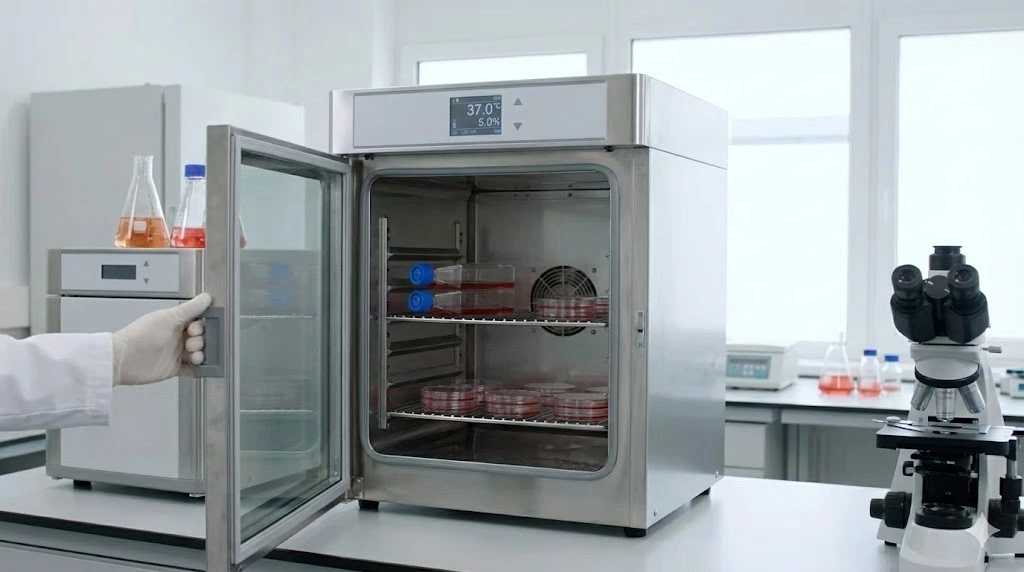
The Best Laboratory Incubators of 2026
Discover the best laboratory incubators of 2026. This guide reviews top models for cell culture and microbiology, focusing on precision, capacity, and new releases.
Dec 05, 2025
Technical Insight
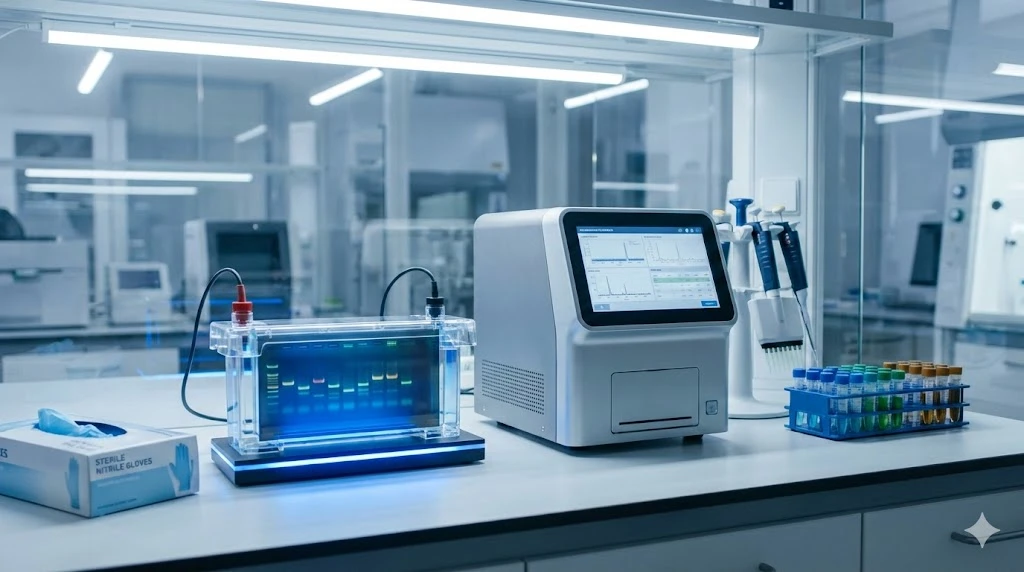
The Best Electrophoresis Equipment of 2026
Discover the top electrophoresis equipment of 2026 for research and clinical labs. Compare models for budget, throughput, and versatility.
Dec 05, 2025
Technical Insight
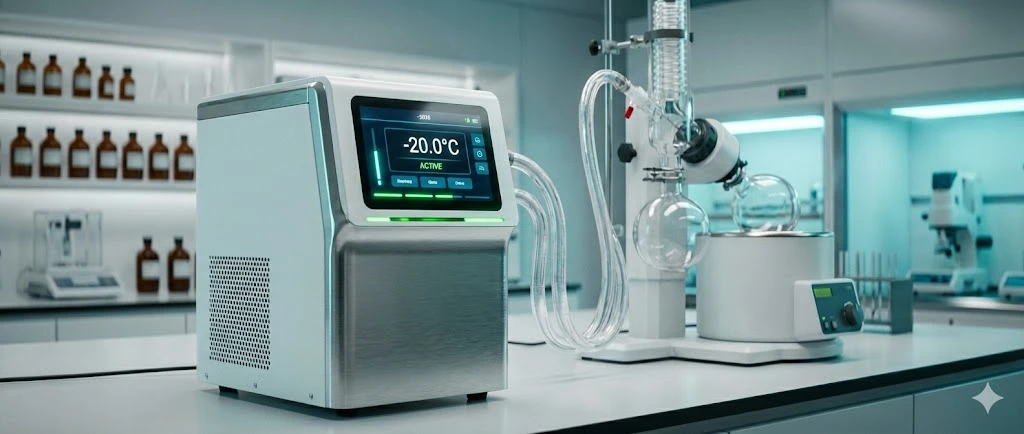
The Best Laboratory Chillers of 2026
Discover the top-rated cooling systems for 2026. This guide reviews high-performance, eco-friendly, and budget-conscious lab chiller models.
Dec 03, 2025
Featured, Popular Products
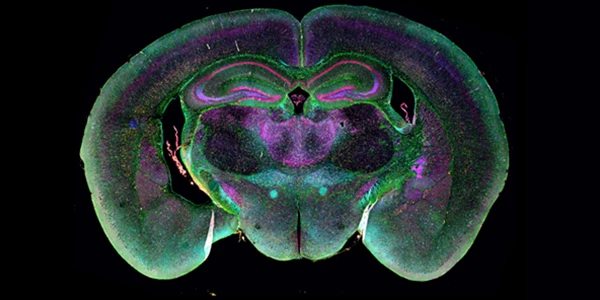
Remapping Research and Discovery with Spatial Imaging
By integrating molecular identity with spatial relationships, researchers can build more predictive models, uncover hidden cellular interactions, and generate insights that would remain invisible using conventional methods alone.